Diabetic Foot Ulcer & Non-Healing Wound Care
Specialized diabetic ulcer healing, classical Jatyadi Taila, Triphala Kashaya Dhara wound irrigation, and Vrana Ropana to save limbs and prevent amputation.
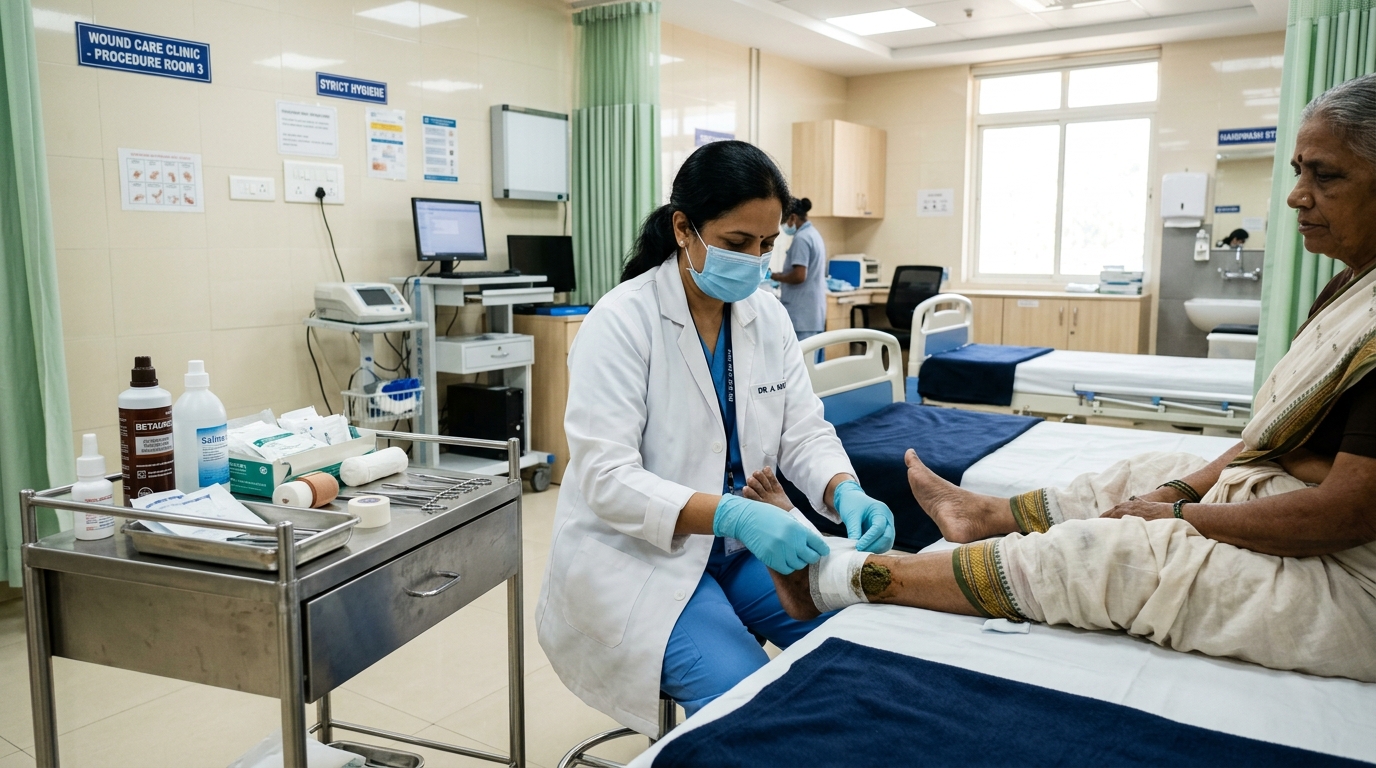
Clinical Understanding & Microvascular Ulcer Pathology
Diabetic foot ulcers (DFUs) represent one of the most devastating complications of chronic diabetes mellitus, preceding over 80% of lower extremity amputations. The pathogenesis is a lethal triad of peripheral neuropathy (loss of protective pain sensation), peripheral arterial disease (microvascular ischemia and tissue hypoxia), and impaired immune phagocytosis. Minor unnoticed blisters or pressure points break down into deep, indolent ulcers that rapidly penetrate through subcutaneous fascia, tendons, and periosteum. Hyperglycemic micro-angiopathy starves the wound of oxygen and reparative fibroblasts, while bacterial biofilms establish deep polymicrobial infections, leading to gangrenous tissue necrosis.
Root Cause in Siddha & Ayurveda (Dushta Vrana & Madhumeha Janya Vrana)
In Ayurveda and Siddha medicine, diabetic ulcers are diagnosed as Dushta Vrana arising on a terrain of Madhumeha. The disease involves deep vitiation of all three doshas with a predominance of Vatha-Pitta, extensively corrupting Mamsa (muscle tissue), Meda (adipose tissue), and Sira (blood micro-vessels). The wound is characterized by sloughing gray exudate (Pooti Puyamukha), offensive odor, unyielding indurated margins, and severe tissue ischemia. Modern surgical protocols often rush to debridement and progressive amputations (toes, trans-metatarsal, below-knee). Our centuries-proven Siddha-Ayurvedic Shodhana-Ropana methodology cleanses necrotizing slough naturally and triggers vigorous healthy granulation tissue growth.
Clinical Stages & Progressive Warning Signs
R S Velumani Siddha Ayurvedha Hospital Complete Diabetic Wound Protocol
Why Surgical Amputation is Avoidable in Most Cases
Surgical amputation is a traumatic, irreversible mutilation that leaves patients wheelchair-bound and carries a 50% five-year mortality rate. R S Velumani Siddha Ayurvedha Hospital has saved hundreds of diabetic feet facing imminent amputation through dedicated daily herbal wound cleansing and regenerative oils.
Expected Recovery Timeline & Prognosis
- Days 1 - 7: Rapid elimination of foul odor, clearance of gray necrotic slough, and reduction in surrounding leg cellulitis and swelling. - Days 8 - 21: Appearance of healthy, bright red granulation tissue filling the ulcer crater; visible contraction of wound margins. - Days 22 - 60: Complete epithelialization and closure of the ulcer bed with robust, healthy new skin; full preservation of the limb.
Common Symptoms Treated
Clinical IndicationsStructured 3-Phase Clinical Journey
Step-by-Step Hospital Protocol
Slough Dissolution & Infection Clearance
Daily Triphala Kashaya Dhara irrigation and Nimba applications to dissolve thick necrotic slough, eradicate odor, and kill bacteria.
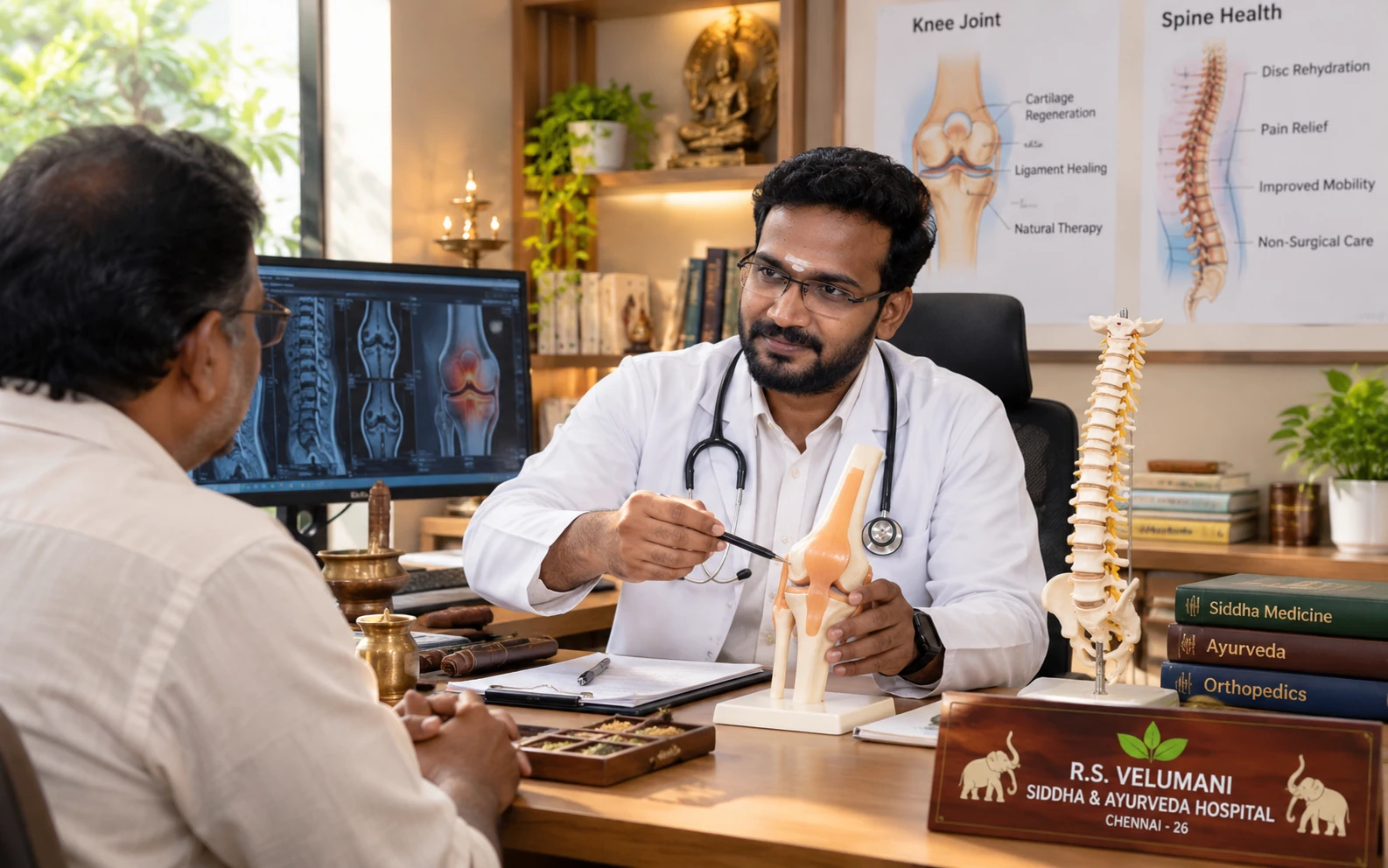
Granulation Induction & Bed Filling
Jatyadi Taila and Murivenna sterile dressings paired with Kaishore Guggulu to stimulate rich, budding red granulation tissue.
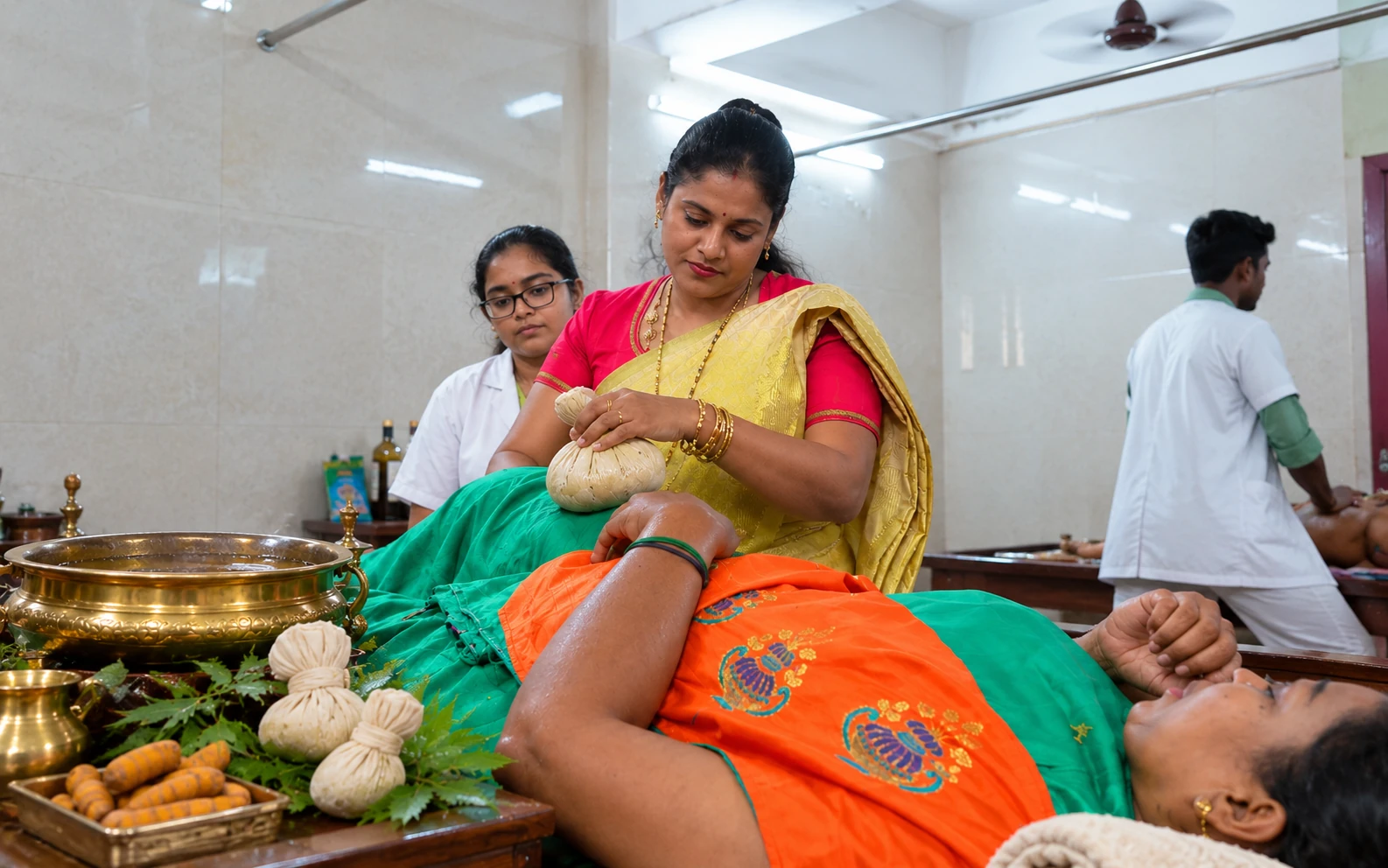
Epithelialization & Complete Wound Closure
Vrana Ropana therapies to advance epidermal margins until the ulcer is completely closed with strong, healthy skin.
Integrated Traditional Therapies
Hospital ProceduresAyurvedic & Siddha Dietary Guidelines (Pathya & Apathya)
Nutritional Medicine- •Bitter gourd, ridge gourd, drumstick leaves, and bottle gourd cooked with turmeric
- •Sprouted green gram (moong) and light moong dal soup rich in healing plant proteins
- •Fresh amla (Indian gooseberry) juice blended with fresh raw turmeric root
- •Unpolished millets, barley khichdi, and moderate portions of steamed red rice
- •Ample lukewarm water infused with boiled vetiver root or coriander seeds
- •Refined white sugar, sweets, bakery cakes, sweet biscuits, and carbonated sodas
- •White polished rice, refined wheat flour (maida), and processed fast foods
- •Walking barefoot anywhere, even indoors, which causes unnoticed micro-trauma
- •Tight, restrictive footwear, stiff shoes, and non-breathable synthetic socks
- •Direct application of harsh chemical antiseptics like hydrogen peroxide which kills new cells
Hospital Infrastructure & Clinical Facility
Vadapalani, Chennai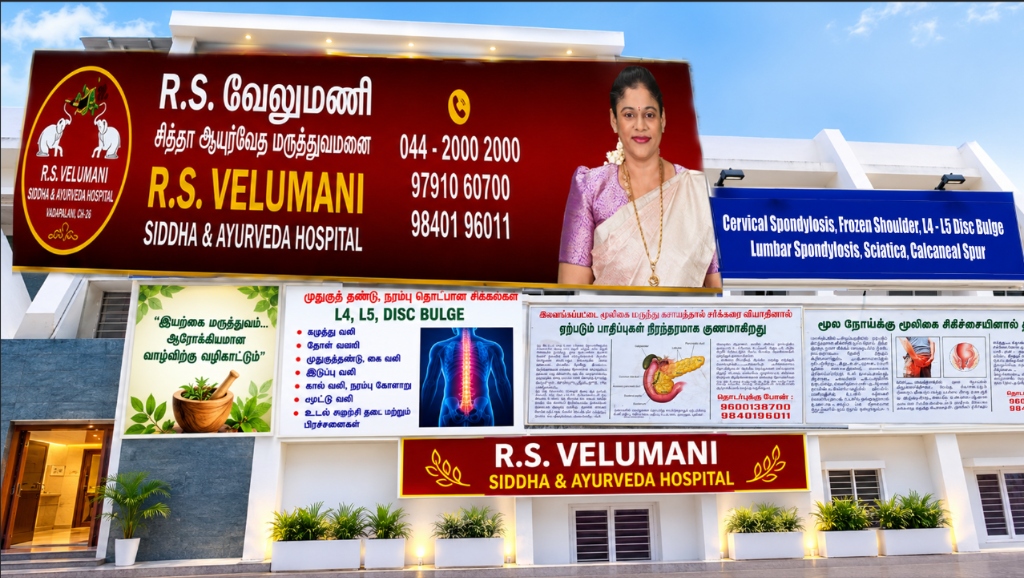
R S Velumani Siddha Ayurvedha Hospital is a fully equipped traditional hospital located in Vadapalani, Chennai. We provide daily outpatient consultations (OPD) and dedicated clinical therapy rooms for non-surgical healing.
Frequently Asked Questions
Doctor AnswersRelated Clinical Research & Recovery Guides
View All Articles →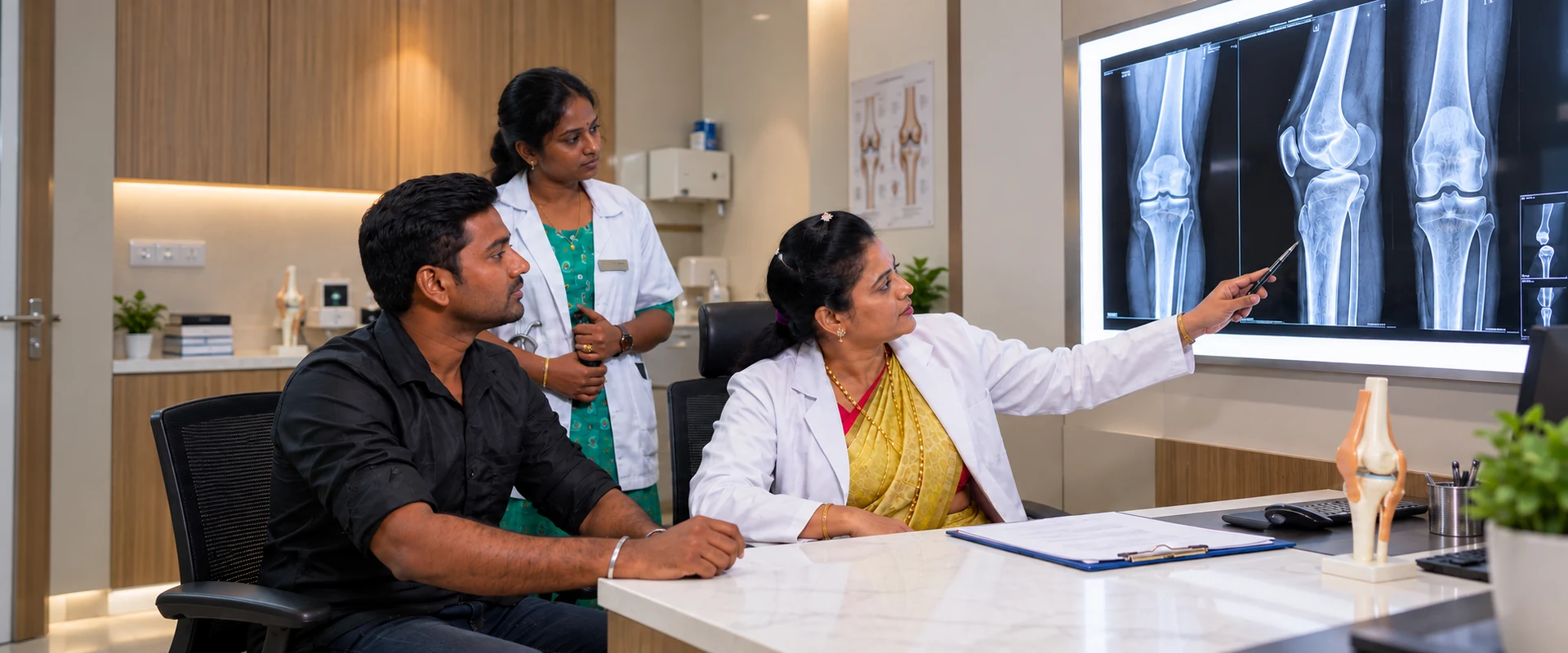
Book Doctor OPD Session
Direct clinical evaluation at R S Velumani Siddha Ayurvedha Hospital, Vadapalani, Chennai.
First Floor, Puttur Kattu Complex, 5, 100 Feet Road, Vadapalani, Chennai – 600026.