Spinal Disc Bulge, Herniation & Sciatica Nerve Pain Care
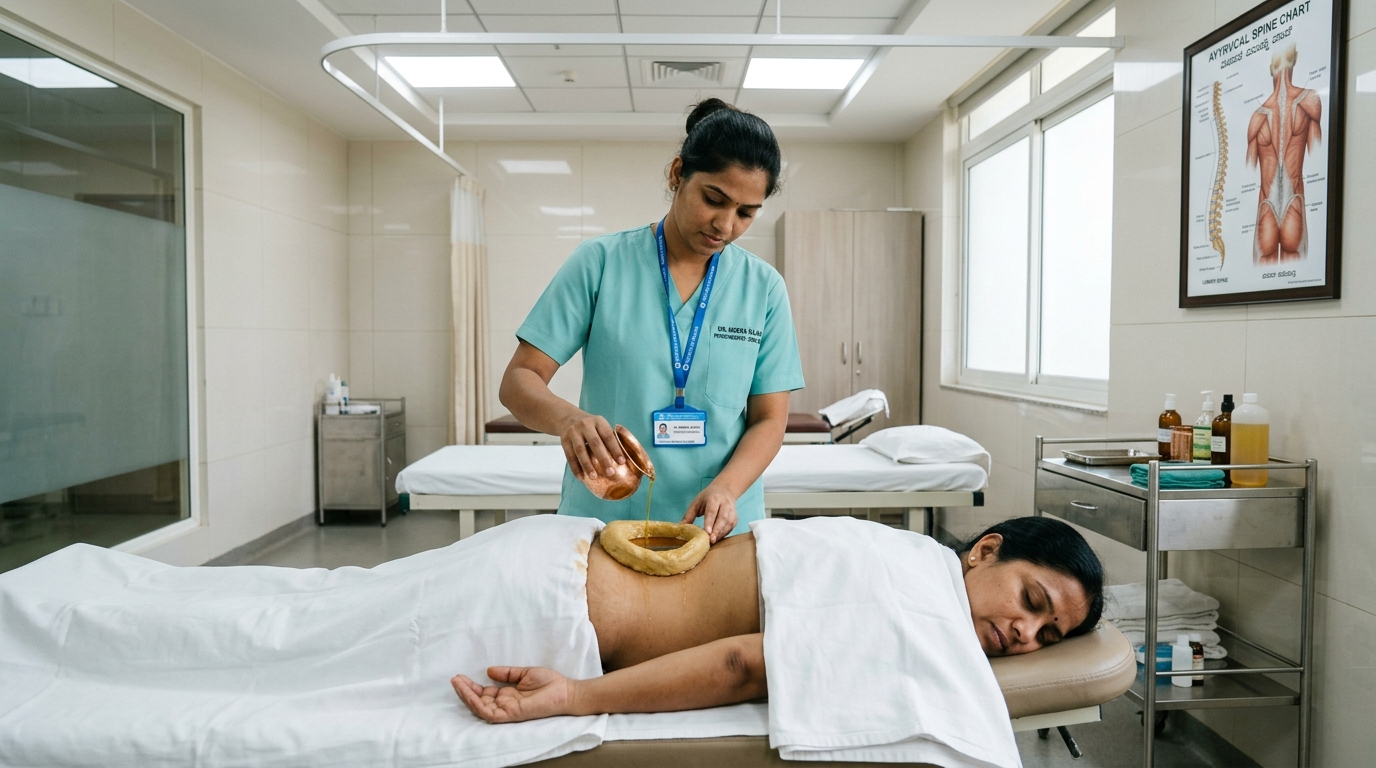
Non-surgical decompression of herniated spinal discs, Kati Vasti, specialized Varmam marma manipulation, and Sahacharadi to eliminate sciatica radiating pain.
Clinical Understanding & Lumbar Radiculopathy Pathology
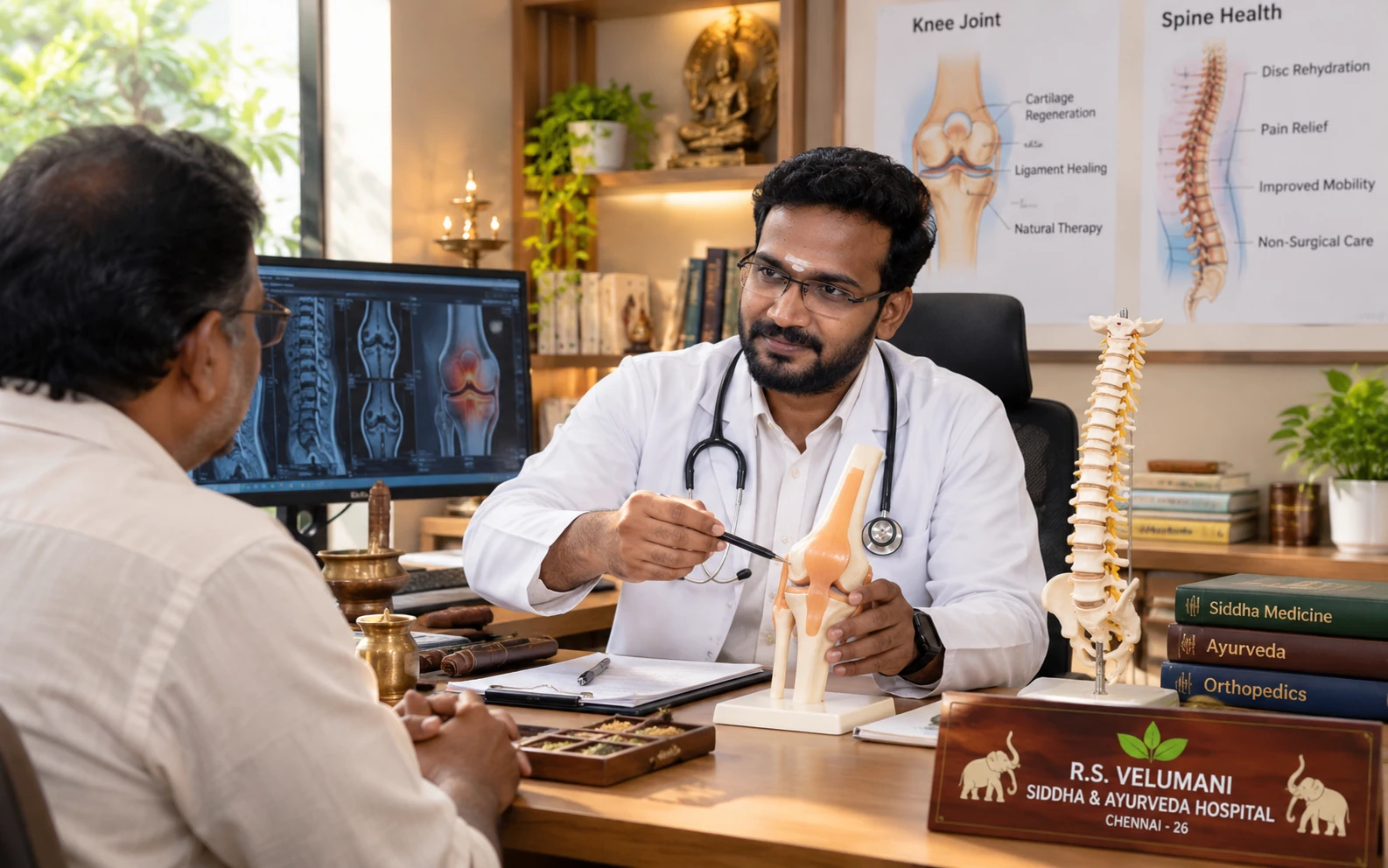
Lumbar disc herniation (disc bulge, protrusion, extrusion, or sequestration) occurs when mechanical failure of the concentric fibrocartilaginous rings of the annulus fibrosus allows the gelatinous, proteoglycan-rich nucleus pulposus to bulge or rupture into the spinal canal or intervertebral neural foramen. In over 95% of cases, this occurs at L4-L5 (compressing the L5 nerve root) or L5-S1 (compressing the S1 nerve root). Mechanical compression combined with intense biochemical neuro-inflammation triggered by leaking nucleus pulposus inflammatory cytokines (TNF-alpha, phospholipase A2) inflames the massive sciatic nerve (Sciatica / Lumbar Radiculopathy). This produces agonizing, burning, electric shock-like shooting pain starting in the lower back or buttock and firing down the posterior thigh, calf, lateral ankle, and toes, accompanied by numbness, sensory paresthesia, and dangerous motor foot drop.
Root Cause in Siddha & Ayurveda (Gridhrasi & Vatha-Kaphaja Dushti)
In Ayurveda and Siddha medicine, sciatica and disc prolapse are diagnosed as Gridhrasi. The name is derived from Gridhra (the vulture), describing the characteristic altered, limping, tilted gait adopted by the suffering patient. The disease is caused by severely vitiated Vatha dosha (often combined with Kapha), lodging in the Kandara (great tendon/nerve trunk) extending from the hip downward through the heel to the toes (Sphik-Padasandhigata). Vatha causes acute neural ischemia, while Kapha produces heavy numbness and swelling around the thecal sac. Conventional orthopedic surgery rushes to microdiscectomy or laminectomy, which cuts away disc tissue, weakens the spinal segment, and causes epidural fibrosis scarring. Our treatment decompresses the nerve and retracts the disc naturally.
Clinical Stages & Progressive Warning Signs
R S Velumani Siddha Ayurvedha Hospital Non-Surgical Disc Decompression Protocol
Why Discectomy & Laminectomy Surgery are Avoidable
Spinal discectomy cuts away your natural disc shock absorber, leaving the disc permanently narrowed and prone to re-herniation or adjacent disc failure. Over 96% of severe disc herniation and sciatica patients achieve complete, permanent recovery through our non-surgical protocol.
Expected Recovery Timeline & Prognosis
- Days 1 - 7: Drastic reduction in excruciating shooting leg pain, allowing you to sleep flat at night and stand without tilting. - Days 8 - 21: Normalization of Straight Leg Raise (SLR improves to 80-90 degrees), complete disappearance of calf and toe numbness. - Days 22 - 45: Structural retraction of the herniated disc fragment confirmed on repeat MRI scans, healed annular wall, and restored normal walking gait.
Common Symptoms Treated
Clinical IndicationsStructured 3-Phase Clinical Journey
Step-by-Step Hospital Protocol
Nerve Decompression & Acute Pain Relief
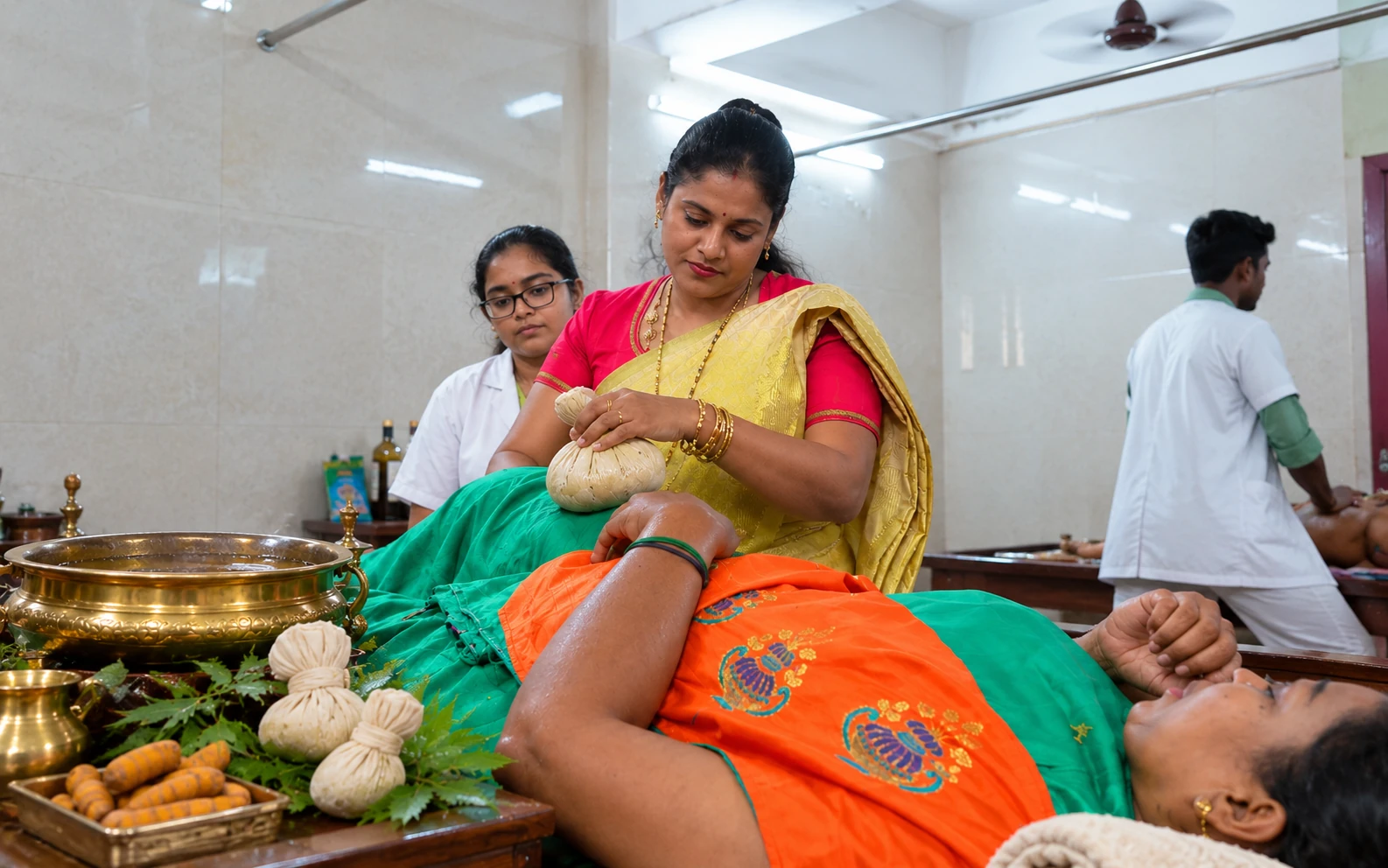
Intensive Kati Vasti, Varmam sciatic release, and Rasnadi Kashayam to reduce thecal sac edema and halt shooting leg pain.
Disc Retraction & Annular Healing
Matra Basti and Trayodashanga Guggulu to stimulate disc retraction, eliminate foot numbness, and restore Straight Leg Raise.
Spinal Architecture Stabilization
Core muscular rehabilitation and Rasayana bone tonics to strengthen the annular wall and ensure permanent freedom from recurrence.
Integrated Traditional Therapies
Hospital ProceduresAyurvedic & Siddha Dietary Guidelines (Pathya & Apathya)
Nutritional Medicine- •Warm cow's milk boiled with garlic cloves, a pinch of turmeric, and pure cow's ghee
- •Cooked horse gram (Kollu) rasam to clear nerve-blocking Vatha and improve circulation
- •Warm cooked vegetables like bottle gourd, ridge gourd, ash gourd, and drumstick
- •Soaked almonds and walnuts rich in neuro-protective essential fatty acids
- •Ample lukewarm water consumed throughout the day to rehydrate spinal disc matrices
- •Sour and acidic foods like tamarind, vinegar, excess tomato, and fermented batter
- •Cold refrigerated foods, ice creams, and sitting in direct cold air conditioner drafts
- •Heavy, gas-forming pulses like black gram (urad dal), rajma, and excessive potatoes
- •Sitting on soft, low sofas or driving on bumpy roads without lumbar support
- •Forward bending to lift objects or twisting the waist while getting out of bed
Hospital Infrastructure & Clinical Facility
Vadapalani, Chennai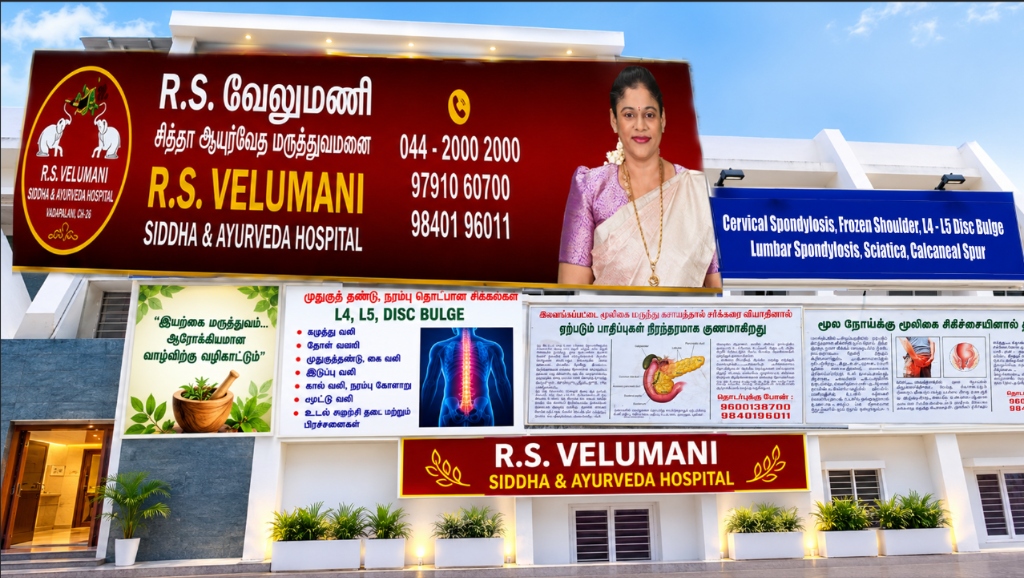
R S Velumani Siddha Ayurvedha Hospital is a fully equipped traditional hospital located in Vadapalani, Chennai. We provide daily outpatient consultations (OPD) and dedicated clinical therapy rooms for non-surgical healing.
Frequently Asked Questions
Doctor AnswersRelated Clinical Research & Recovery Guides
View All Articles →
Book Doctor OPD Session
Direct clinical evaluation at R S Velumani Siddha Ayurvedha Hospital, Vadapalani, Chennai.
First Floor, Puttur Kattu Complex, 5, 100 Feet Road, Vadapalani, Chennai – 600026.