Kidney Stones (Renal Calculi) Natural Flushing Care
Natural lithotriptic stone dissolution, Varunadi Kashayam, Pashanabheda, and Gokshuradi Guggulu to break down renal calculi into powder and flush them painlessly.
Clinical Understanding & Nephrological Pathology
Kidney stones (Nephrolithiasis or Renal Calculi) are solid crystalline mineral aggregations that precipitate out of supersaturated urine within the renal calyces and pelvis. The vast majority (approx. 80%) are calcium oxalate stones, followed by calcium phosphate, uric acid, and struvite stones. When a stone dislodges from the renal parenchyma and descends into the narrow ureter (3-4 mm lumen), it causes acute ureteral obstruction, severe ureteric smooth muscle spasm, and upstream hydronephrosis. This produces excruciating, paroxysmal renal colic radiating from the flank/loin downward to the groin, accompanied by microscopic or gross hematuria (blood in urine), dysuria, nausea, and vomiting.
Root Cause in Siddha & Ayurveda (Mutrashmari & Mutravaha Sroto Dusti)
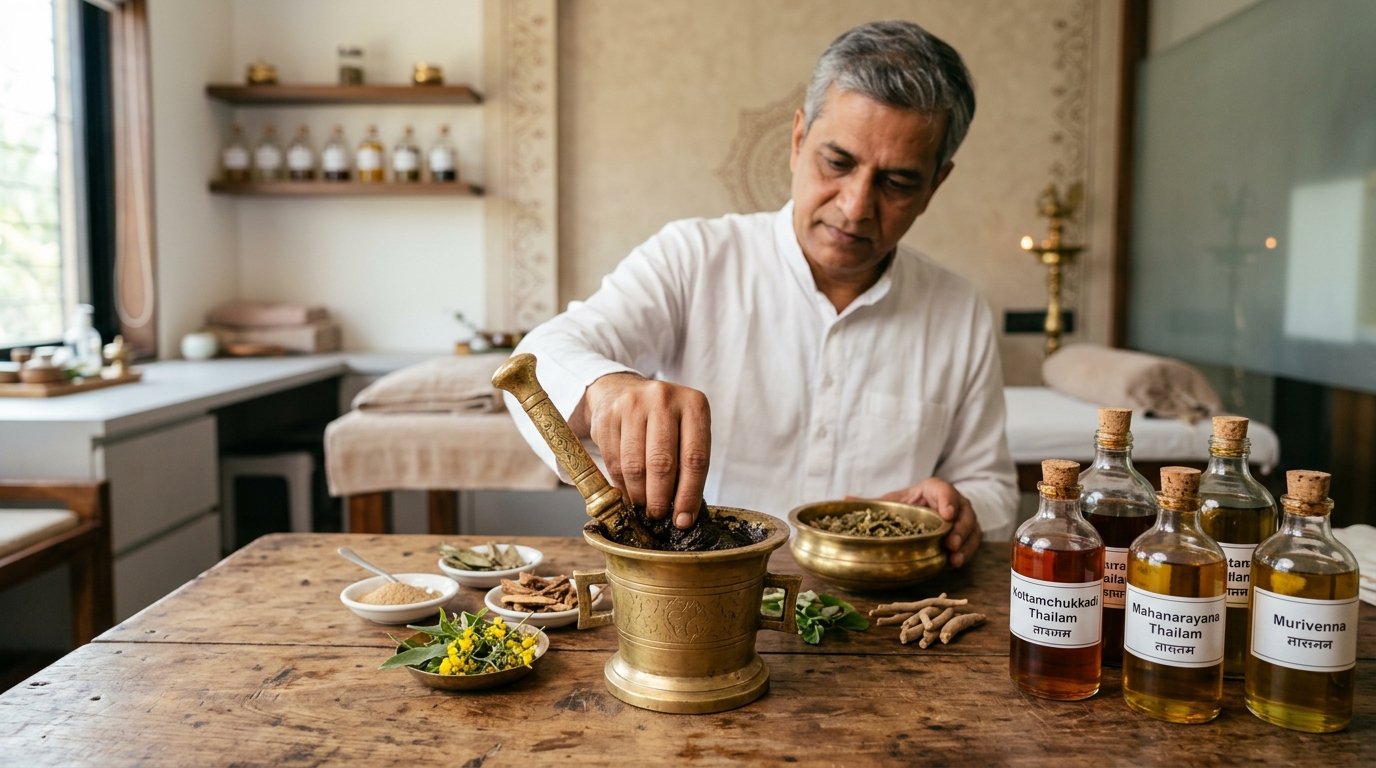
In Ayurveda and Siddha medicine, kidney stones are termed Mutrashmari, classified as a severe disease of the Mutravaha Srotas. The condition is triggered by aggravated Vatha and Kapha doshas. Vatha dries up the urinary solutes, while viscous Kapha binds the crystalline precipitates together into hard, compacted stones (Ashmari like hard gravel). Low water intake, excessive consumption of oxalate-rich foods, high animal protein, hot dry climate, and suppression of the urge to urinate (Mutra Vegadharana) drive crystallization. Surgical stent placement and shockwave lithotripsy (ESWL) blast stones mechanically but leave stone fragments behind, with an alarming 50% recurrence rate within 5 years.
Clinical Stages & Progressive Warning Signs
R S Velumani Siddha Ayurvedha Hospital Lithotriptic Stone Protocol
Why Surgical Stenting & Lithotripsy are Avoided
Double-J (DJ) stent placement causes agonizing bladder spasms, blood in urine with every step, and recurrent urinary infections. Shockwave lithotripsy (ESWL) can cause renal tissue contusions and high recurrence. Our 100% natural herbal protocol dissolves stones up to 12-15 mm painlessly into fine powder that flushes out smoothly in urine.
Expected Recovery Timeline & Prognosis
- Days 1 - 3: Immediate cessation of acute agonizing flank pain, relief from burning urination, and relaxation of ureteral spasms. - Days 4 - 10: Progressive fragmentation and gradual dissolution of stones into sand-like gravel, visible upon passing urine. - Days 11 - 21: Complete clearance of renal and ureteral stones confirmed on repeat ultrasound scan; restored kidney health.
Common Symptoms Treated
Clinical IndicationsStructured 3-Phase Clinical Journey
Step-by-Step Hospital Protocol
Colic Relief & Ureteric Spasm Relaxation
Chandraprabha Vati, Shweta Parpati, and warm diuretic fluids to relax ureteric smooth muscles and immediately halt agonizing colic pain.
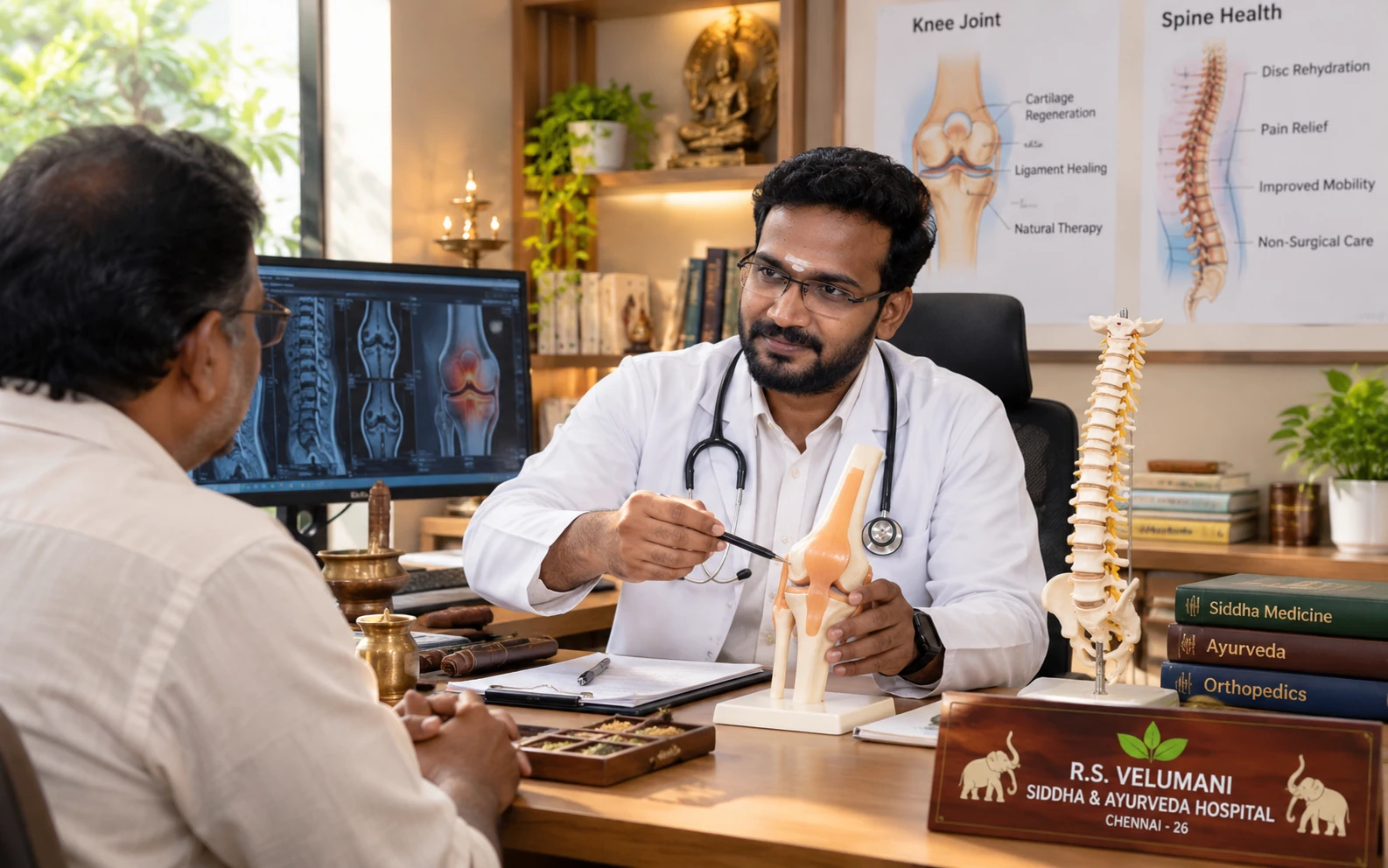
Lithotriptic Dissolution & Diuretic Flushing
Intensive Varunadi Kashayam, Pashanabheda, and Hajrul Yahood Bhasma to crumble stones into sand-like particles and flush them out.
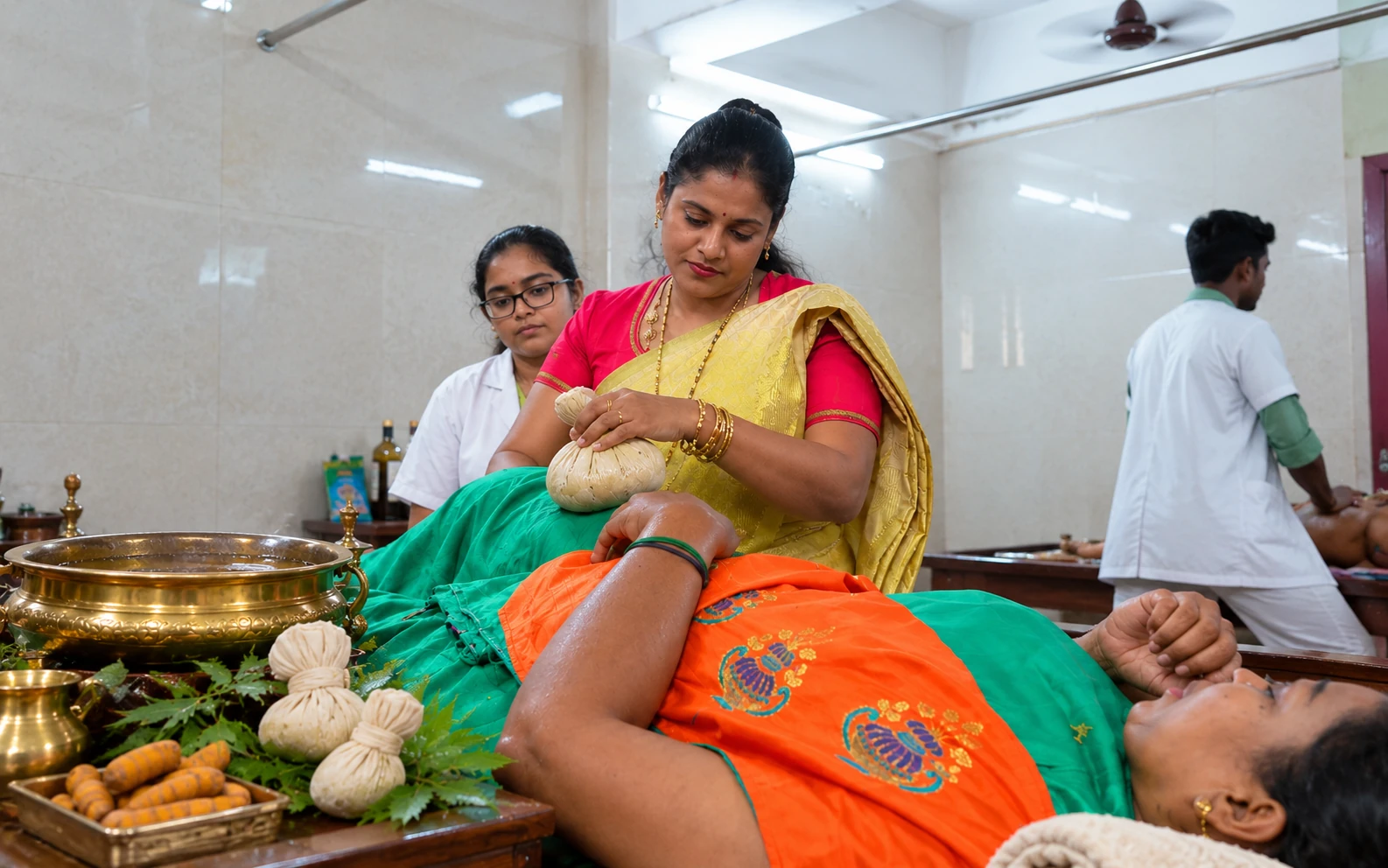
Renal Calyx Healing & Recurrence Prevention
Punarnavadi tonics and dietary pH balancing to heal the renal mucosal bed and permanently prevent new crystal nucleation.
Integrated Traditional Therapies
Hospital ProceduresAyurvedic & Siddha Dietary Guidelines (Pathya & Apathya)
Nutritional Medicine- •Fresh banana stem (Vazhaithandu) juice or soup consumed several times weekly
- •Ample lukewarm water (at least 3 to 4 liters daily) to maintain dilute clear urine
- •Cooked horse gram (Kollu) rasam to naturally dissolve urinary crystalline bonds
- •Barley water, tender coconut water, and fresh cucumber juice
- •Fresh lemon water rich in natural citric acid which inhibits stone crystallization
- •High-oxalate foods like spinach (palak), beetroot, raw tomatoes with seeds, and cocoa
- •Excessive animal protein, red meat, seafood, and organ meats that raise uric acid
- •Highly salty snacks, chips, pickles, and processed foods that increase urinary calcium
- •Carbonated sodas, artificial energy drinks, and caffeinated beverages
- •Suppression of the natural urge to urinate (Mutra Vegadharana) for long durations
Hospital Infrastructure & Clinical Facility
Vadapalani, Chennai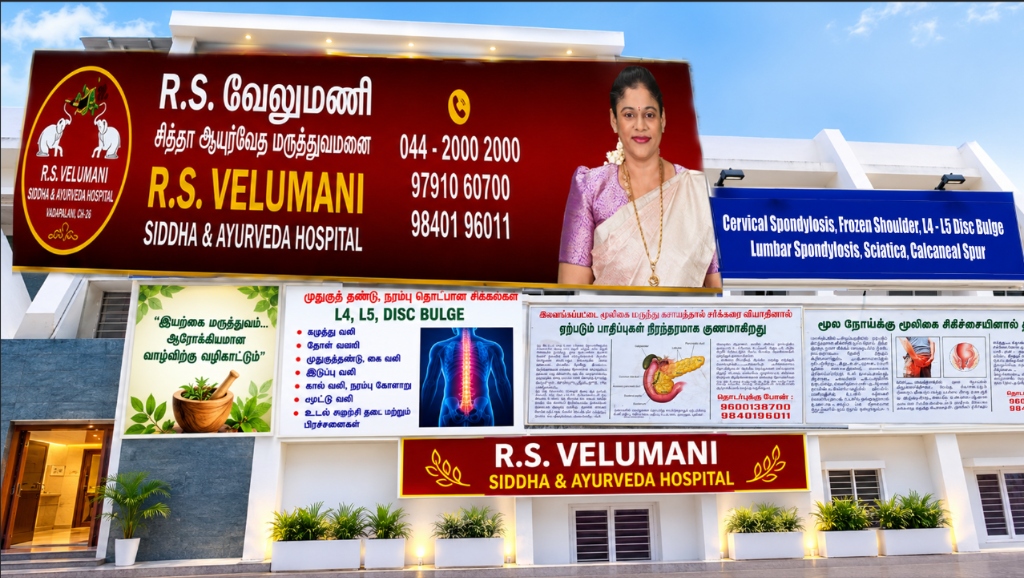
R S Velumani Siddha Ayurvedha Hospital is a fully equipped traditional hospital located in Vadapalani, Chennai. We provide daily outpatient consultations (OPD) and dedicated clinical therapy rooms for non-surgical healing.
Frequently Asked Questions
Doctor Answers
Book Doctor OPD Session
Direct clinical evaluation at R S Velumani Siddha Ayurvedha Hospital, Vadapalani, Chennai.
First Floor, Puttur Kattu Complex, 5, 100 Feet Road, Vadapalani, Chennai – 600026.