Chronic Dermatological & Inflammatory Skin Care
Comprehensive dermatological care for eczema, fungal ringworm (Dadru), contact dermatitis, and chronic hives with Mahatiktaka Ghritam and Gandhak Rasayan.
Clinical Understanding & Dermatological Pathology
Chronic inflammatory skin diseases encompass a diverse spectrum of dermatological disorders including atopic eczema, contact dermatitis, seborrheic dermatitis, lichen planus, urticaria (hives), and persistent fungal dermatomycoses (Tinea corporis/cruris or ringworm). While conventional pathology categorizes them separately, they share core pathophysiological hallmarks: epidermal barrier disruption, severe intercellular edema (spongiosis), micro-vesicle formation, intense leukocyte infiltration, and agonizing pruritus. Chronic scratching induces lichenification (thick, leathery, hyperkeratotic skin) and secondary bacterial staphylococcal infection.
Root Cause in Siddha & Ayurveda (Kushta, Vicharchika & Dadru)
Ayurveda and Siddha group all dermatological diseases under the broad spectrum of Kushta Roga (predominantly Kshudra Kushta). Eczema is diagnosed as Vicharchika, fungal ringworm as Dadru, and urticaria as Sheetapitta. The underlying pathogenesis involves all three doshas vitiating the four cutaneous bodily constituents (Tvak, Rakta, Mamsa, Lasika), known collectively as the Sapta Kocha. Incompatible dietary habits (Viruddha Ahara), suppressed perspiration, emotional stress, and liver stagnation dump biological toxins into the capillary bed. Conventional steroid creams thin the skin barrier, creating chronic corticosteroid dependence without curing the underlying blood toxicity.
Clinical Stages & Progressive Warning Signs
R S Velumani Siddha Ayurvedha Hospital Complete Dermatological Protocol
Why Topical Steroids & Antihistamines Fail
Synthetic hydrocortisone creams provide temporary symptom masking while causing skin atrophy, stretch marks, and steroid withdrawal dermatitis. Our 100% botanical protocol detoxifies the internal blood and lymphatic terrain, delivering velvety, smooth, and itch-free skin permanently.
Expected Recovery Timeline & Prognosis
- Days 1 - 7: Immediate relief from unbearable itching, drying up of oozing serous fluid, and cooling of localized skin heat. - Days 8 - 21: Shedding of crusty scales, disappearance of red fungal borders, and healing of painful skin cracks and fissures. - Days 22 - 45: Complete restoration of natural skin texture, fading of post-inflammatory hyperpigmentation, and long-term recurrence prevention.
Common Symptoms Treated
Clinical IndicationsStructured 3-Phase Clinical Journey
Step-by-Step Hospital Protocol
Itch Cessation & Oozing Arrest
Panchavalkala herbal washes and Karanja-Neem applications to immediately halt unbearable itching and dry up weeping lesions.
Blood Detoxification & Fungal Eradication
Internal Panchatiktaka Kashayam and Gandhak Rasayan to purify blood endotoxins and clear deep fungal hyphae.
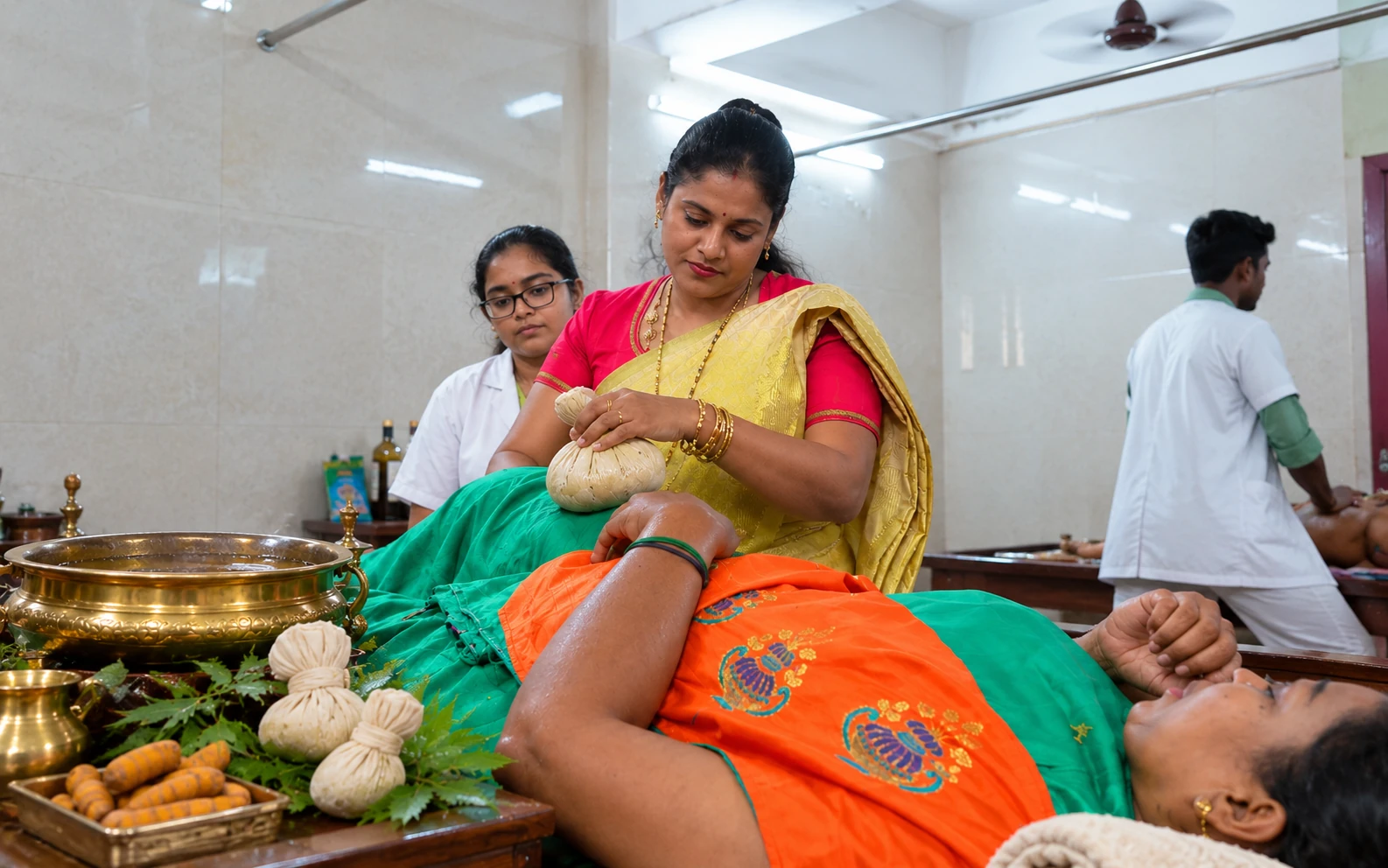
Epidermal Barrier Repair & Skin Tone Recovery
Mahatiktaka Ghritam to rebuild natural skin lipid layers, soften thickened leathery patches, and restore clear, smooth skin.
Integrated Traditional Therapies
Hospital ProceduresAyurvedic & Siddha Dietary Guidelines (Pathya & Apathya)
Nutritional Medicine- •Bitter vegetables including bitter gourd, ridge gourd, bottle gourd, and snake gourd
- •Light moong dal soup prepared with turmeric, cumin, and fresh curry leaves
- •Fresh pomegranate, sweet apples, and soaked black raisins
- •Lukewarm water boiled with vetiver roots (Khus) or Khadira bark
- •Small amounts of pure virgin coconut oil used for both cooking and external hydration
- •Sour foods like tamarind, vinegar, tomatoes, pickles, and fermented batter
- •Eggplant (brinjal), shellfish, prawns, crabs, and poultry chicken which trigger histamine
- •Incompatible food combinations (Viruddha Ahara) like milk with salty foods or fruit
- •Excessive red chilies, hot spices, deep-fried snacks, and street fast foods
- •Harsh chemical soaps, synthetic detergents, and perfumed body lotions
Hospital Infrastructure & Clinical Facility
Vadapalani, Chennai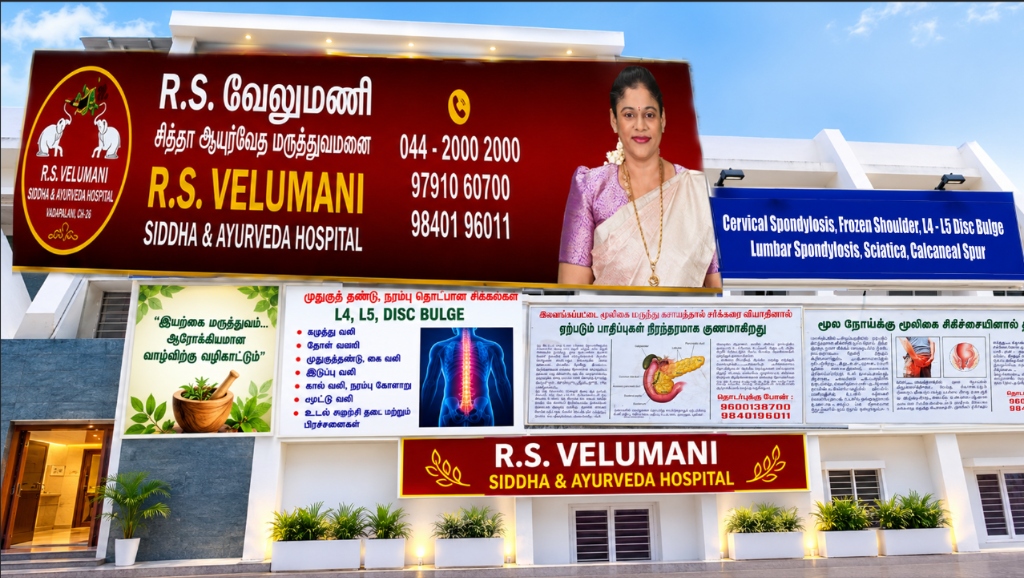
R S Velumani Siddha Ayurvedha Hospital is a fully equipped traditional hospital located in Vadapalani, Chennai. We provide daily outpatient consultations (OPD) and dedicated clinical therapy rooms for non-surgical healing.
Frequently Asked Questions
Doctor Answers
Book Doctor OPD Session
Direct clinical evaluation at R S Velumani Siddha Ayurvedha Hospital, Vadapalani, Chennai.
First Floor, Puttur Kattu Complex, 5, 100 Feet Road, Vadapalani, Chennai – 600026.