Bleeding & Painful Piles (Hemorrhoids) Care
Gentle Siddha-Ayurvedic piles management, herbal Kshara treatments, Triphala Guggulu, and Avagaha Sweda to shrink hemorrhoidal venous cushions without cutting.
Clinical Understanding & Ano-Rectal Pathology
Hemorrhoids (piles) are abnormally enlarged, engorged vascular cushions located within the anal submucosa. Anatomically, these cushions consist of arterio-venous plexuses, smooth muscle fibers (Treitz's muscle), and connective tissue. Chronic straining during hard bowel movements, elevated intra-abdominal pressure, pregnancy, or prolonged sitting stretches and tears the supportive connective tissue. This leads to downward venous displacement, severe congestion, and dilation. Piles are categorized as internal (originating above the dentate line, typically causing painless bright red bleeding) or external (below the dentate line, prone to acute thrombosis, excruciating pain, and swollen prolapse).
Root Cause in Siddha & Ayurveda (Arshas & Moola Noi)
Siddha medicine classifies piles as Moola Noi, while Ayurveda diagnoses it as Arshas. The disease is fundamentally an Apana Vatha and Pitta-Kapha derangement caused by impaired Agni (digestive fire) and chronic Malabaddhata (constipation). Sluggish digestion produces hard, dry feces that physically abrades the delicate anal mucosa during evacuation. Aggravated Apana Vayu blocks venous outflow, while aggravated Pitta causes venous wall inflammation and active bleeding (Raktarshas). Conventional hemorrhoidectomy (surgical cutting) carries distressing risks of anal sphincter injury, fecal incontinence, and recurrent piles if the digestive root is neglected.
Clinical Stages & Progressive Warning Signs
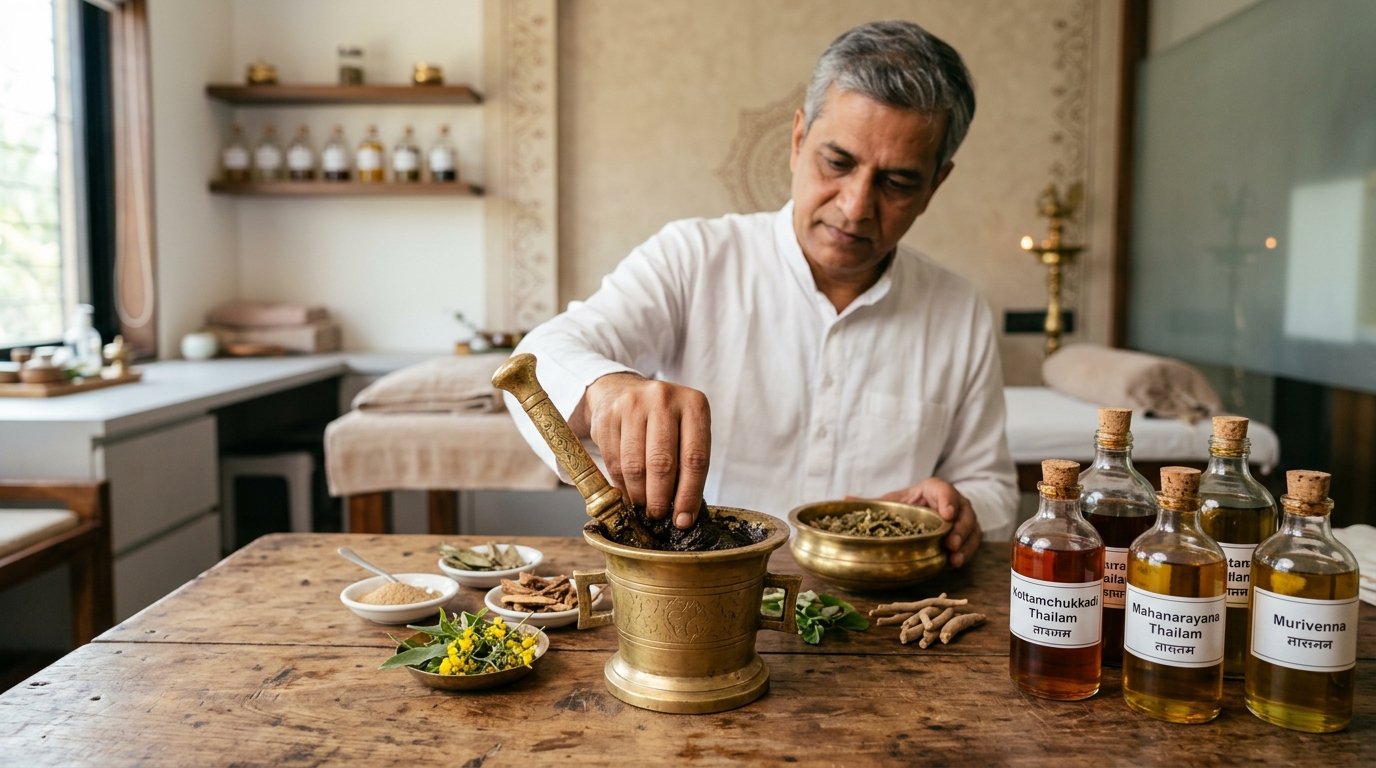
R S Velumani Siddha Ayurvedha Hospital Non-Surgical Piles Protocol
Why Painful Surgical Hemorrhoidectomy is Avoided
Traditional surgical cutting involves severe postoperative pain, painful wound dressings, and risks of anal stenosis or sphincter damage. Our traditional Kshara and herbal approach naturally shrinks piles cushions without surgical cuts, general anesthesia, or hospitalization.
Expected Recovery Timeline & Prognosis
- Days 1 - 3: Immediate cessation of bright red rectal bleeding and drastic relief from severe throbbing defecation pain. - Days 4 - 14: Marked reduction in hemorrhoidal mass size, elimination of anal itching and mucus discharge, and smooth, effortless bowel motions. - Days 15 - 30: Complete shrinkage of pile masses, restored anal sphincter tone, and comprehensive prevention of recurrence.
Common Symptoms Treated
Clinical IndicationsStructured 3-Phase Clinical Journey
Step-by-Step Hospital Protocol
Bleeding Arrest & Anal Pain Relief
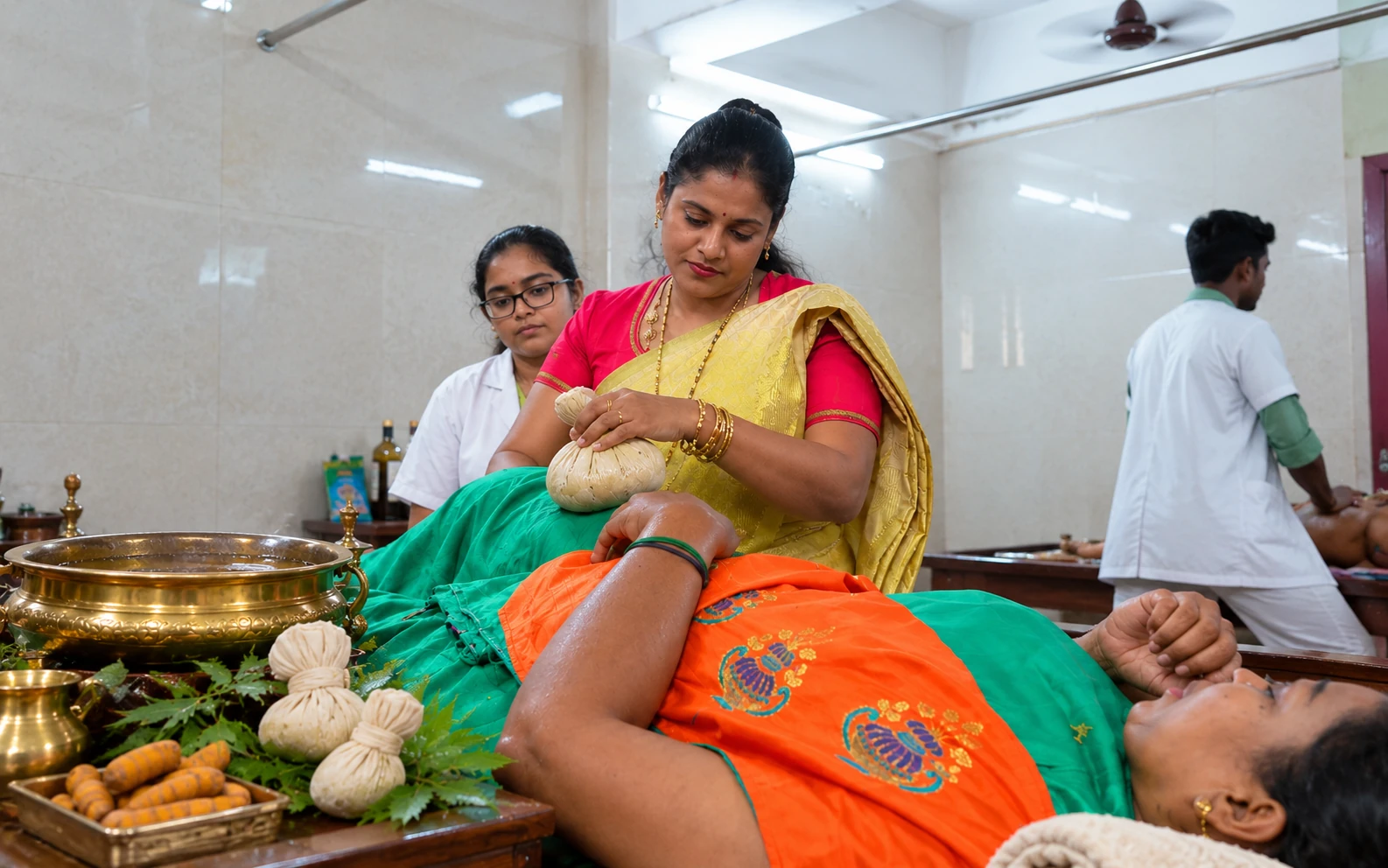
Immediate Avagaha Sweda sitz baths, Nagakesara formulations, and natural stool softeners to stop bleeding and relieve anal spasm.
Kshara Mass Shrinkage & Tissue Toning
Application of specialized herbal Kshara and Triphala Guggulu to coagulate engorged venous cushions and shrink protruding pile masses.
Apana Vayu Harmonization & Recurrence Prevention
Abhayarishtam and gut motility therapies to establish effortless daily bowel movements, permanently preventing hemorrhoidal recurrence.
Integrated Traditional Therapies
Hospital ProceduresAyurvedic & Siddha Dietary Guidelines (Pathya & Apathya)
Nutritional Medicine- •Abundant fresh vegetables including elephant foot yam (Senai Kizhangu), ash gourd, and ridge gourd
- •Fresh homemade buttermilk (Takra) seasoned with roasted cumin, ginger, and curry leaves
- •High-soluble fiber foods like soaked figs (Anjeer), black raisins, and prunes
- •Ample lukewarm water consumed regularly throughout the day (at least 2.5 to 3 liters)
- •Steamed red rice or old barley khichdi prepared with a teaspoon of pure cow's ghee
- •Extremely spicy foods, hot green chilies, red chili powder, and pungent masalas
- •Deep-fried snacks, samosas, fast foods, and processed bakery items
- •Heavy non-vegetarian foods, particularly red meat, poultry, and spicy seafood
- •Strong caffeinated beverages, alcohol, and excessive smoking
- •Prolonged continuous sitting on hard surfaces and forceful straining on the toilet
Hospital Infrastructure & Clinical Facility
Vadapalani, Chennai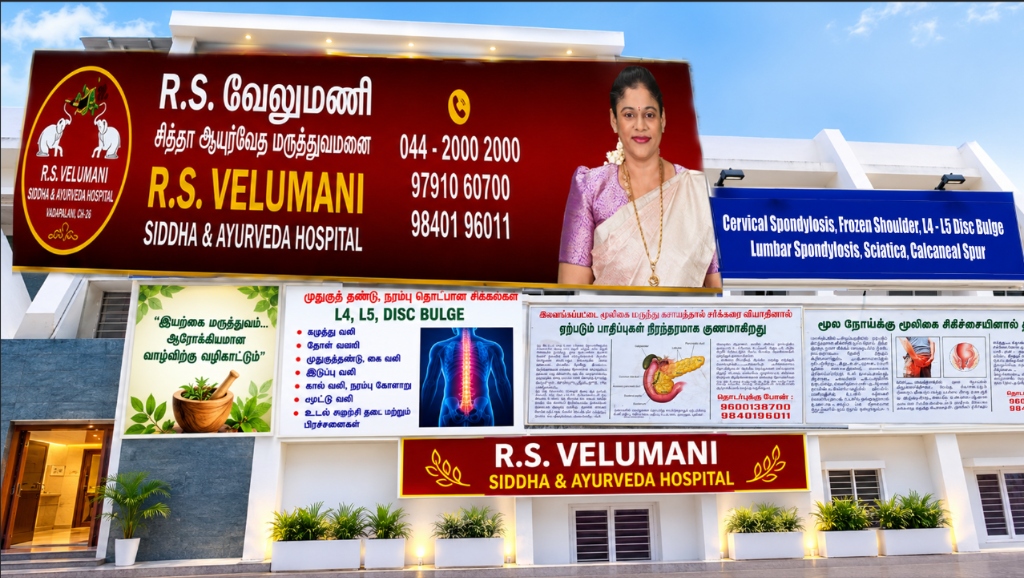
R S Velumani Siddha Ayurvedha Hospital is a fully equipped traditional hospital located in Vadapalani, Chennai. We provide daily outpatient consultations (OPD) and dedicated clinical therapy rooms for non-surgical healing.
Frequently Asked Questions
Doctor AnswersRelated Clinical Research & Recovery Guides
View All Articles →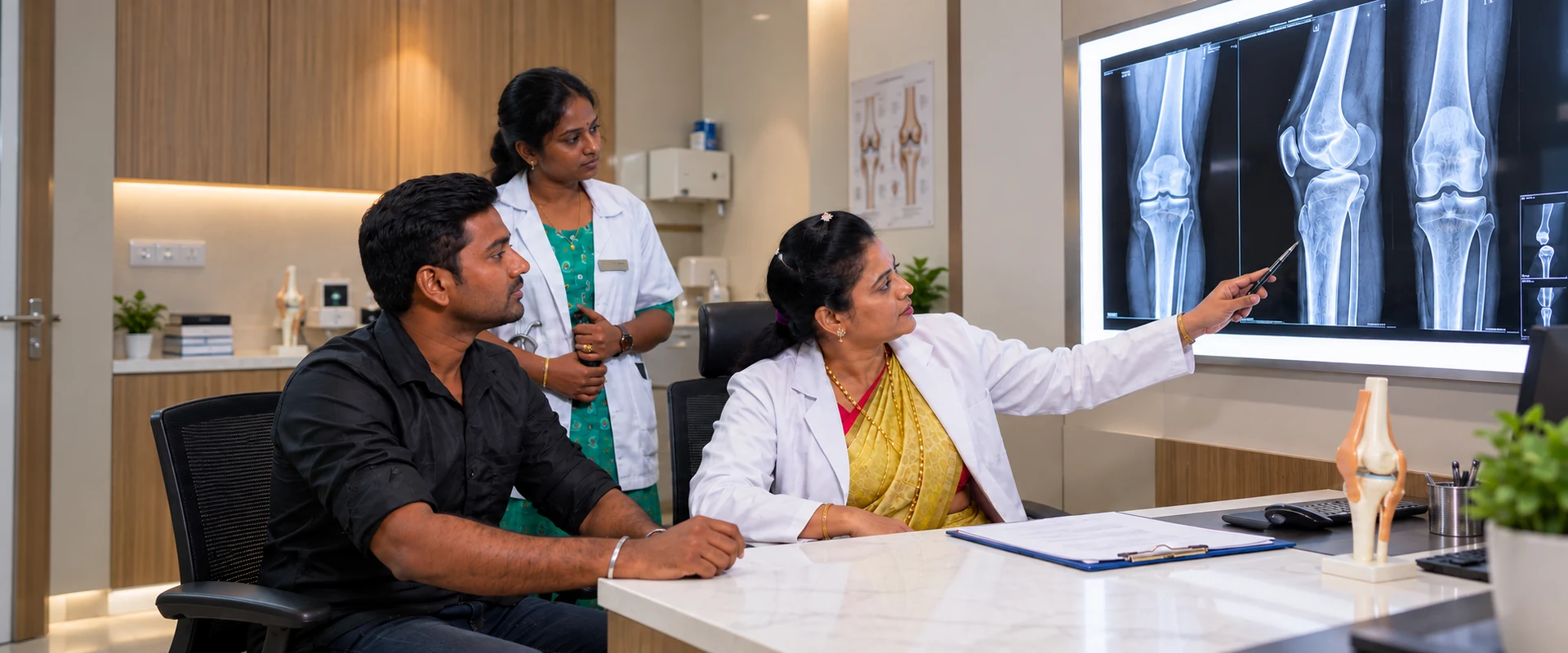
Book Doctor OPD Session
Direct clinical evaluation at R S Velumani Siddha Ayurvedha Hospital, Vadapalani, Chennai.
First Floor, Puttur Kattu Complex, 5, 100 Feet Road, Vadapalani, Chennai – 600026.